
Plus-Size Wrap vs. Bodycon Dresses: What to Check Before Buying
A wrap-style dress and a bodycon dress ask different questions of a fitting room. One may have an overlapping front or a wrap-look design; the other follows the body's outline. Neither label guarantees comfort or coverage. Before choosing, check how the neckline and skirt stay put, compare the garment measurements with your own, and think through the movements your day actually involves.
Start with the coverage you want to manage
A wrap front can make neckline and skirt overlap the first things to inspect. Look closely at the listing photos: does the front appear to cross, and is there a visible tie or other closure? A wrap-look crossover in a photo does not by itself prove that the garment is an adjustable, functional wrap. Even a visible tie is not a promise that it can be tightened to change the waist fit. Check the written construction details and, when available, customer-care sizing information before relying on adjustment.
A bodycon shape has a different coverage question: how does the neckline sit, and does the garment remain comfortable across bust, waist and hips? Close-fitting does not mean every body will experience it the same way. Look for the actual measurements and construction details rather than assuming the style will fit a particular way.
Compare bust, waist and hip fit separately
Use your current bust, waist and hip measurements as a starting point, then compare them with the seller's size chart and any finished-garment measurements. Seamwork explains that ease is the difference between body and garment measurements, and that it affects both movement and silhouette [4]. For a fitted dress, check which chart size each of your bust, waist and hip measurements points to instead of ordering from the bust alone; for a wrap-look style, check the bust and waist as well as the skirt through the hip. One size label cannot tell you how those areas will fit together.
If the listing provides only a size name and not measurements, treat that as missing information, not a reason to infer stretch or ease. Check the product page for the specific size information currently offered. Displayed size choices do not mean every size is available. Check the current product page for your exact size and color.
Test the overlap and movement, not just the standing pose
For an overlapping skirt, consider how much coverage you want when sitting, stepping up or walking at your usual pace. A slit, if shown, adds another movement and coverage consideration. Product photography can suggest the visible shape but cannot tell you how secure the overlap will feel during your day. If you can try the dress on, sit, walk and reach before removing tags. If not, check the return terms and ask about construction details before ordering.
A bodycon skirt has no wrap overlap to check, but movement still matters. Consider whether the listing gives enough information to judge ease through the hips and stride length. Do not assume a close silhouette contains stretch; look for explicit product details. The same sitting and walking test is useful for either style.
Check shoulders, bra coverage and getting dressed
Necklines and sleeves can decide whether a dress works with the bra or undergarment you plan to wear. Compare the pictured neckline, shoulder coverage and strap placement with what you are comfortable wearing; a sleeveless or off-shoulder look may call for a different underlayer than a long-sleeve V-neck. Photos are only a starting point, so use written garment details where they are available.
Also check how the dress goes on and closes. A pullover design, a side zipper, and a tie closure each involve different dressing steps, but do not infer a closure from the silhouette alone. When the product description names a closure, use that detail; when it does not, ask or plan for uncertainty.
A quick choice matrix for your shortlist
Choose the dress that answers your practical questions, not the label that sounds more promising. For coverage security, inspect the neckline, skirt overlap and slit. For bust, waist and hip fit, compare each measurement rather than sizing from one number. For sitting and walking, consider overlap and stride, then test those motions if you can. For shoulders and bra compatibility, compare neckline and strap placement with your intended undergarment. For getting dressed, verify the closure instead of guessing from the photo. Finally, judge the dress against the outfit and occasion you have in mind, not an imagined fit based on a product name.
If one detail is unclear, put that uncertainty on the shortlist: ask the seller, check the product page, or choose an option with clearer measurements and construction information. A style category is a useful filter, not a fit guarantee.
Three options to compare
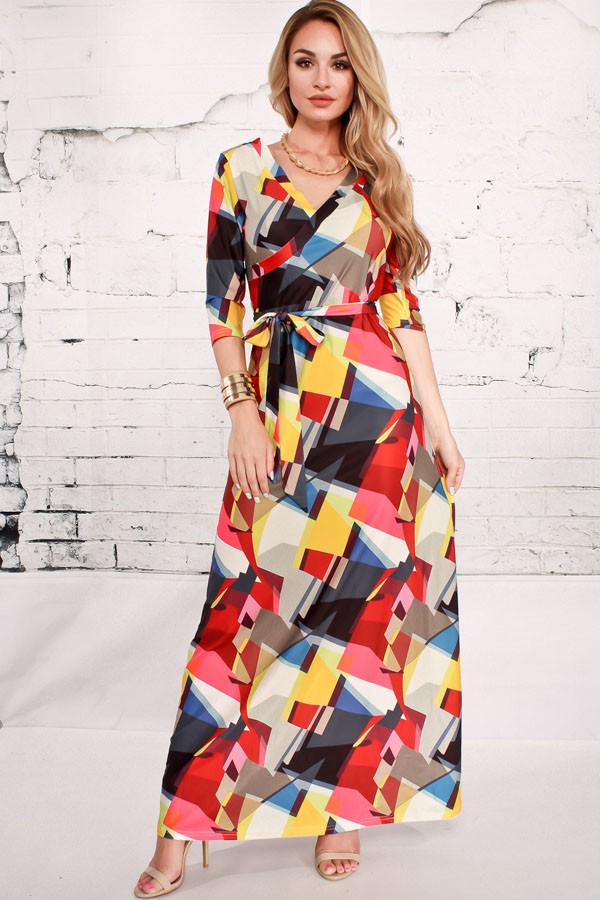
The multicolor geometric maxi has a V-neck, three-quarter sleeves, a printed skirt and a visible waist tie in its image. The listing calls it a wrap dress, but check the product page for construction and fit details before treating the tie as adjustable.
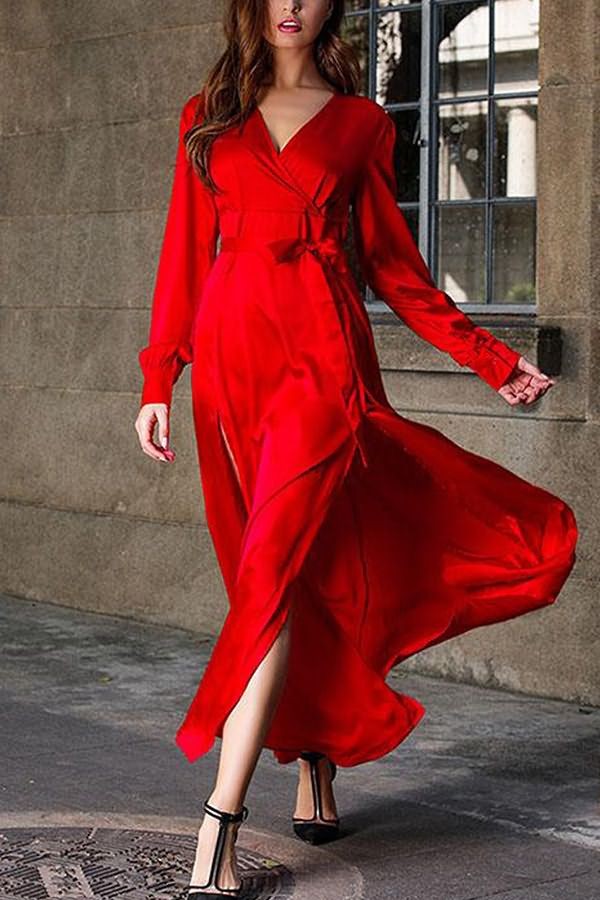
The red party dress appears with long sleeves, a V-neck, a tie belt and a front slit. Its listing describes a wrap style, but the image alone cannot establish how securely the overlap behaves in motion.
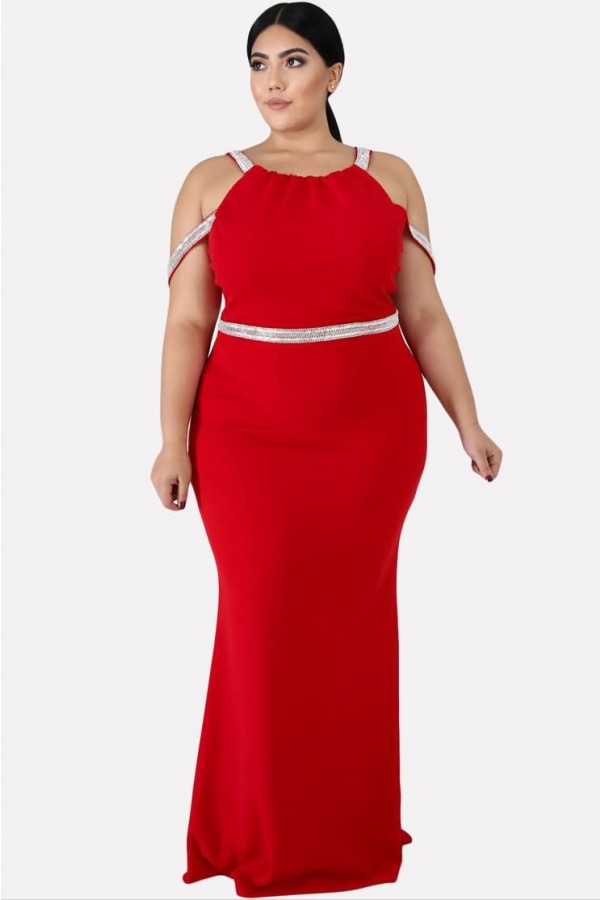
The red sleeveless maxi bodycon has a close silhouette and embellished-looking shoulder and waist details in the image. Check its current page for measurements and closure information; the photo does not establish fabric or stretch.
Frequently asked questions
Is a wrap-look dress always adjustable?
No. A crossover appearance does not prove functional wrap construction, and a visible tie does not guarantee that it adjusts the waist. Check the product's written construction details.
How should I compare sizes in a fitted dress?
Measure bust, waist and hips, then compare each with the product's size chart and finished-garment measurements when available. Do not assume the fabric stretches unless the listing explicitly says so.
What should I test before deciding between the styles?
Check neckline and skirt coverage, sit and walk to assess movement, confirm shoulder and bra compatibility, and verify how the dress closes or goes on.