
Plus-Size Work Dresses: Judge the Pencil Hem Before the Size Label
Most work-dress advice starts with the bust or the waist. I'd start lower. A pencil dress can match your hip measurement exactly and still be a bad office dress if the skirt tapers so hard that you shuffle to the printer. The four dresses below are all fitted, knee-length styles, and each one handles the same problem differently: how much room your legs get.
Why the hem width matters more than the label
A pencil dress narrows from the hip toward the hem. A sheath follows the body with a more even allowance. That sounds like a small difference until you climb a staircase in the narrower one. Apparel Search points to the back vent as the part that opens for a step and closes at rest, so a fitted skirt without one leaves you very little stride.
All four product photos below are taken from the front, so the part that decides your day is out of view. I could not see a vent in any of them. Where a listing does not mention one, treat the stride as unknown and plan to test it.
Apparel Search makes a second point that is easy to miss. Shoulder and bust fit come first because they are the hardest to alter, while waist and hip changes on a sheath are routine tailoring. If you fall between sizes, pick the one that fits the shoulders and bust, then let a tailor deal with the rest. A waist can be taken in later. A tight shoulder seam or a strained bust cannot be fixed with a needle, and those are the two spots you will notice every time you reach for a file or a coffee cup.
One practical habit: before ordering, find the hip and thigh figures in the size chart and compare them with a tape measure around your fullest point. Then pick the size whose numbers leave you room at that point, because a fitted skirt has to cover it when you sit, not just when you stand.
Two fitted dresses for a desk day
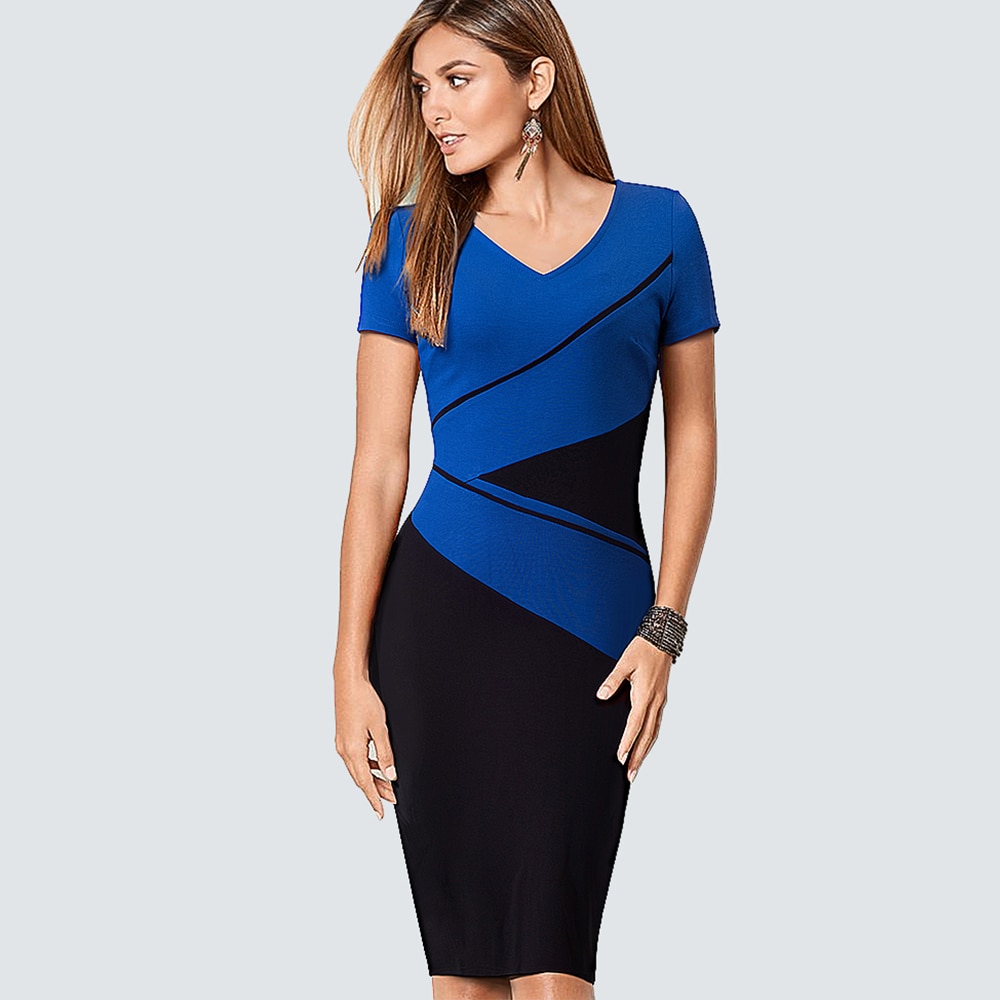
The Colorblock Sheath Bodycon Knee Length Plus Size Pencil Dress is the more graphic of the two. The photo shows royal blue and black in diagonal blocks, with a V-neck and short sleeves. The listing says it is knee-length in a stretchy, machine washable material, which is the detail that matters most for a pencil cut. Diagonal blocking pulls the eye across the torso instead of straight down, so if you want something that reads as business casual rather than a plain black column, start here.
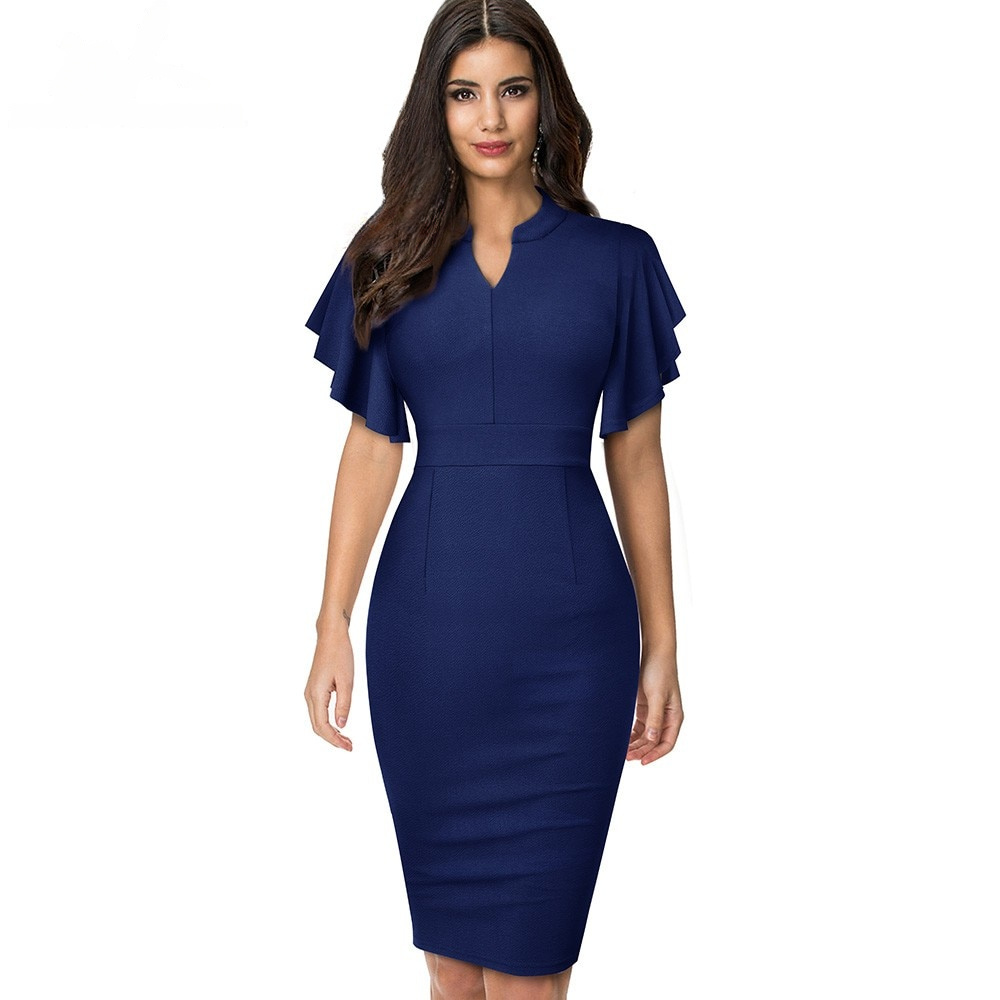
The Ruffle V-Neck Butterfly Sleeve Bodycon Pencil Dress is quieter. In the photo it is navy, with a V-neck, flutter sleeves, a defined waistband and a knee-length hem. The listing describes a polyester and spandex blend and a back zipper. The ruffle sits on the sleeve, so the skirt stays smooth and nothing fights with a blazer. Check that you can reach a back zipper alone before you plan to wear it on a rushed morning.
One easier skirt and one dressier option
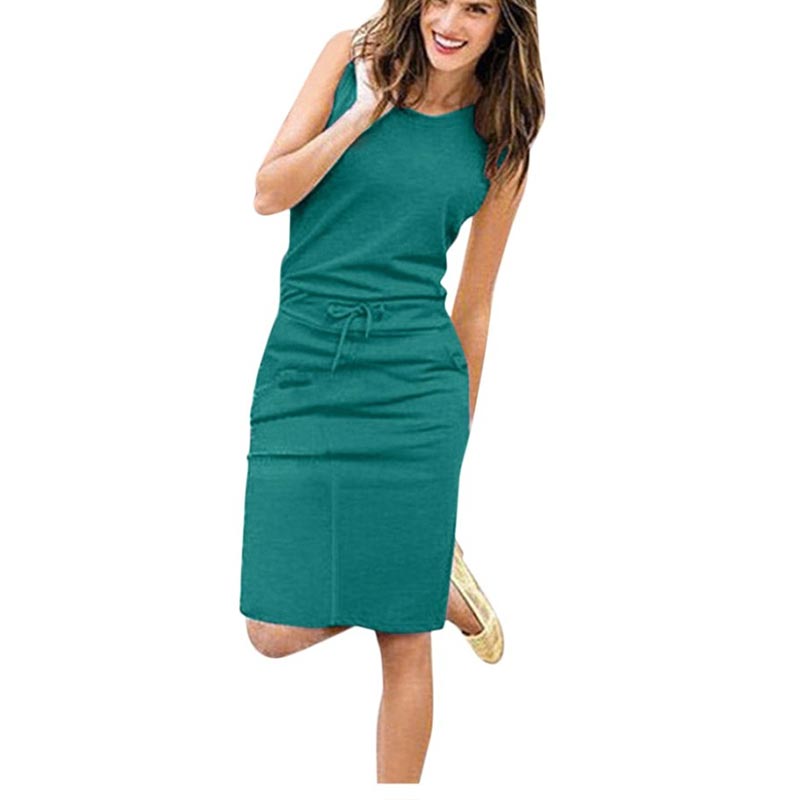
The Drawstring Waist Pocket Sleeveless Pencil Dress has the roomiest-looking skirt of the four. The photo shows a deep teal dress with a round neck, wide straps, a drawstring tie at the waist and side-seam pockets. The listing leans casual and summery, so for an office you would want a cardigan or blazer over it. The drawstring is the useful part. You set the waist yourself, which helps if your waist and hips sit far apart.
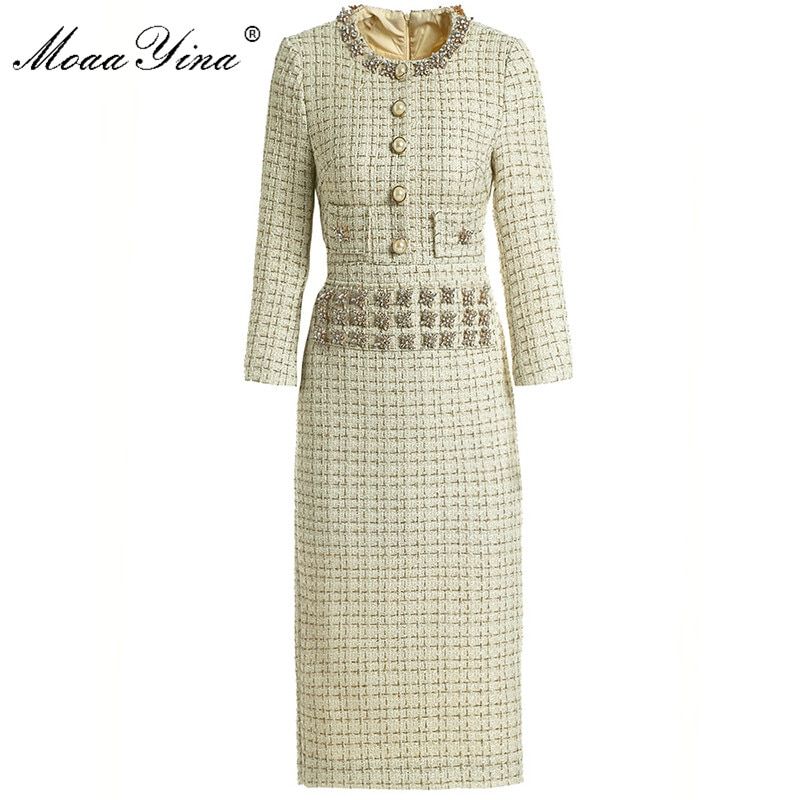
The Crystal Button Tweed Slim Knee Length Dress is the one for an interview or a client meeting. The photo shows a champagne gold textured fabric, long sleeves, a beaded round neckline, gold buttons and a wide embellished waistband. The listing says polyester, regular fit, knee-length, and mentions no stretch, so I would treat it as a structured dress that needs a more careful size choice. In the photo the hem looks to me like it lands below the knee, so compare the listed length with a dress you already own.
A five-minute test for any fitted work dress
Run this once the dress arrives, in the shoes you plan to wear to work:
- Stand and look for horizontal creases across the hip or bust. Apparel Search reads these as a sign the dress is too tight or too short in that zone.
- Take ten normal steps, then climb one stair. If your stride shortens or the hem creeps up, the skirt is too narrow for how you move.
- Sit on a firm chair for a full minute. The hem should stay near its standing level and the waist should not dig.
- Raise both arms and reach for something on a shelf. A strained back seam or a rising neckline means the shoulders and bust are small.
- Reach behind you for the zipper or tie. If you can't do it alone, decide whether that is acceptable on a workday.
If a dress passes the first two checks but fails sitting, going up a size usually costs less than the daily annoyance. If it fails on stride, no size will widen a hem that is too narrow, and it is better to send it back.