
Plus-Size Theater Dresses: Matinee, Evening or a Special Night?
A theater outfit has two jobs: make the evening feel like an occasion and stay out of the way once the lights go down. A dress that looks lovely standing in front of a mirror still needs to work while you sit, reach for a program, climb steps and carry your coat. Start with those tasks, not an imaginary rule that every evening performance requires a gown.
These three DressMePlus listings offer different ways to dress for a matinee, a regular evening show or a deliberately dressier celebration. They are shopping comparisons based on current listings and original product photos, not wearing reviews. All three had warehouse stock when checked, but exact size-and-color availability is not established for every item. Confirm garment measurements and the specific variant before ordering.
Separate the venue rule from your outfit preference
Broadway.com's dress-code FAQ says Broadway theaters do not enforce a dress code and describes business casual as the norm. Dressing up is an option, not a condition of enjoying a Broadway show. That distinction matters when you are buying a dress: you do not need to solve a black-tie problem that your ticket never created.
Do not extend that answer to every opera house, gala, private reception or theater restaurant. Check your own venue and any separate event invitation. A fundraising evening with an explicit dress code is different from a normal public performance. If dinner comes first, check the restaurant's requirements independently.
For an ordinary matinee, I would prioritize the whole day: travel, lunch and the performance. For an evening show, the same dress can work with a different bag or jewelry. If the outing is an anniversary or birthday treat, choose a more decorative outfit because you enjoy it, not because an evening curtain time automatically demands formalwear.
Matinee or straight from work: compare a structured button-front style
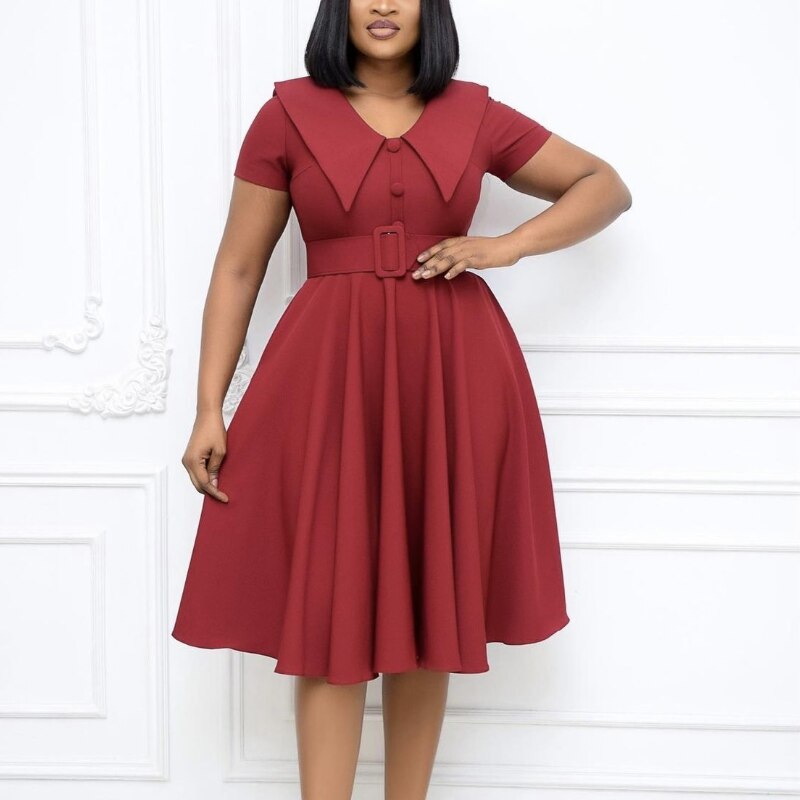
The A-Line Office Dress Pleated High Waist Button Up Short Sleeves has a collar, front buttons, a matching buckle belt and a skirt with visible folds. Its original photo shows a deep red version. Other color names appear in the listing; the photo is not proof that each color is available.
This is the option I would compare first for a daytime show or an office-to-theater plan. The collar and belt provide enough visual detail that the rest of the outfit can stay simple. Try it with shoes you already trust for the route to the venue and a bag that holds your essentials without needing a second tote.
Before buying, ask for the bust and waist measurements and whether the pictured belt is included. If you can try it on, sit down and look for pulling between the front buttons. Check whether the buckle stays comfortable when you lean forward. A button-front look is only useful if you are not spending the performance checking the closure.
An evening show: compare a tiered dress with fewer front details
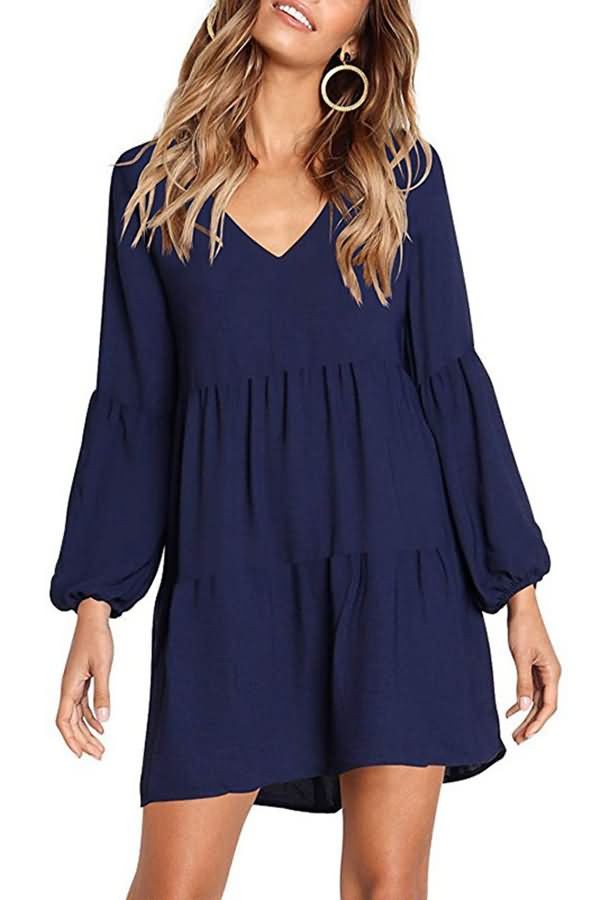
The Elegant Dark-Blue Tiered A-Line Dress with Long Puff Sleeves and V-Neck shows a dark navy dress with horizontal gathered seams, a V-shaped neckline and fuller lower sleeves. Compared with the button-front option, its visible interest comes from the tiers and sleeves rather than a collar and buckle.
I would consider this when you want a quieter outfit with a little shape and detail. A small pair of earrings and a compact bag would keep the focus on the dress. Check how your chosen coat fits over the sleeves; the photograph cannot tell you how comfortably the two garments will move together.
Do not buy on the word 'midi' in the description. The photographed hem appears above the model's knees, and a photograph cannot establish where it will fall on you. Request shoulder-to-hem length and compare it with a dress you own. The checked warehouse record identifies one XL-labeled unit, but XL is not a standardized measurement or a guarantee of fit. Verify the current option and measurements before treating this as your size.
A celebratory night: compare a sash and an overlapping front
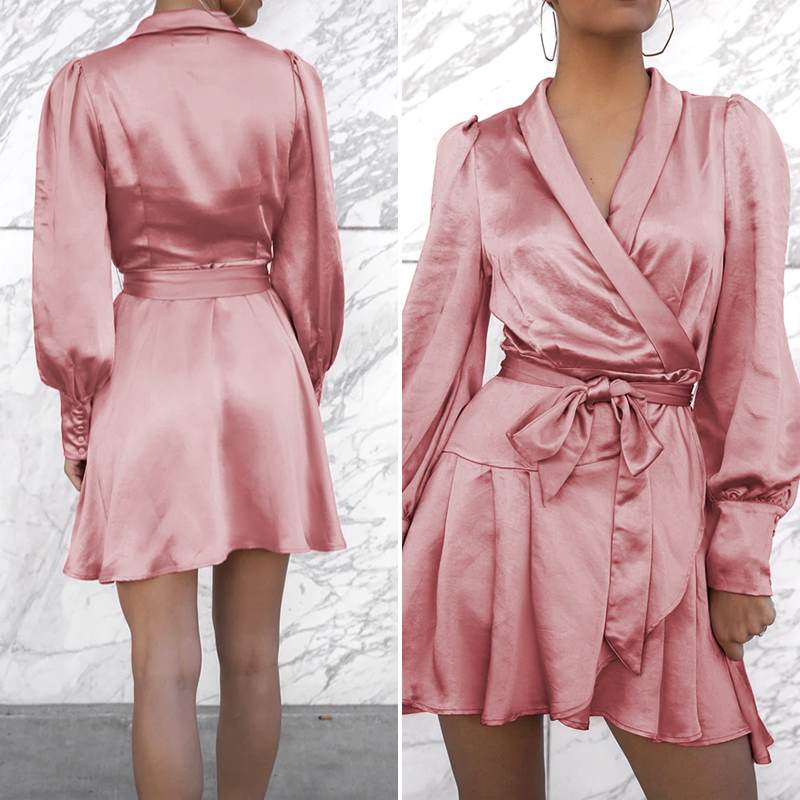
The Pleated Hem and Belted Waist Satin Dress has a pink version in its original image, with long sleeves, a broad folded collar, an overlapping front and a matching sash. The listing calls it satin; that label alone does not establish fiber content, stretch or how it feels. Those details need confirmation if they affect your purchase.
This is the dressier-looking option in this comparison, especially if you like the waist tie as the outfit's focal point. I would keep accessories restrained and decide whether to tie the sash in front or slightly to the side only after checking the garment's construction. Do not assume that the front overlap means it is an adjustable, fully opening wrap dress.
Length deserves special attention here too: the product URL calls the dress mini, the description says midi, and the photo shows a short skirt. Ask for an actual measurement rather than choosing whichever label you prefer. Test the overlap while seated and walking, and check whether the sash knot presses against your abdomen or takes up space where your arm naturally rests.
Run a seat-and-aisle check, not just a mirror check
Use a chair and your planned shoes for a practical rehearsal. First, sit with your feet on the floor and check the hem without holding it down. Second, lean forward as if retrieving your bag: watch the neckline and front closure. Third, rest your arms at your sides and notice whether cuffs, sleeve volume or a belt become distracting. Fourth, stand and take several steps to see whether a hem or overlap needs constant adjustment.
Then add the coat and bag. Can you carry both while keeping a hand free? Can the bag close with your ticket, phone and any necessities inside? Check the venue's bag policy before deciding to bring something larger. Avoid assuming there is a coat check or convenient space for an oversized tote.
Finally, choose accessories that will not demand attention during the show. Try moving bracelets and a pendant in a quiet room; if they repeatedly tap or catch on the dress, swap them. None of these checks guarantees comfort, but they are more useful than assuming that a loose-looking skirt or a long sleeve automatically works for your evening.
Choose the dress for the itinerary you actually booked
Start with the button-front option if your priority is a daytime or work-to-show outfit. Compare the navy tiered style if you prefer fewer visible fastenings and want sleeve detail. Look at the sash style if dressing up is part of the celebration, while giving its short hem and overlapping front a closer check. These are styling choices, not a ranking of which body shape deserves which dress.
For more buying checks, the Journal's Plus-Size Dinner Date Dresses guide covers a seated-fit checklist, and Plus-Size Long-Sleeve Dresses focuses on the upper arm. Use those alongside this theater-specific check if dinner or a sleeve concern is part of your plan.
Open the product cards below to compare the current listings. Match measurements to your own clothes, confirm the exact stocked variant and choose the option that lets you concentrate on the performance rather than managing the outfit.
Frequently asked questions
Do I need a formal dress for an evening Broadway show?
Broadway.com says Broadway theaters do not enforce dress codes. Choose your preferred level of dressiness, and separately check any restaurant, gala or private-event requirements.
How do I compare mini and midi labels that disagree?
Ask for shoulder-to-hem length and compare it with a dress you own. Model photos and labels cannot establish the hem position on your body.