
Plus-Size Sweater Dresses With Boots: Start at the Hem
A sweater dress and boots can look like the easiest fall outfit until the two pieces meet. The dress hem sits against the boot top, the skirt catches as you walk, or a combination that looked good standing feels awkward in a chair. Start with that meeting point rather than a rule about which boot supposedly flatters your body.
This guide compares three DressMePlus silhouettes: a short, relaxed dress, a wrap-tied midi, and a flared pleated midi. The outfit ideas below are suggestions based on the product photos, not try-on reports. Choose the dress shape you actually enjoy, then use the boots you own to test the hem, walking room and seated comfort before building the rest of the outfit.
Compare three hem-and-boot combinations
Short dress plus knee-high boots: try this if you want the boots to be a visible part of the outfit. Check how much leg or tights shows between the hem and boot top, both standing and seated. There is no required amount of gap; the useful question is whether you like the proportion and can move comfortably.
Midi plus ankle boots: try this if you want to show the ankle-boot shape beneath the skirt. Look at the outfit from the side as well as the front. A boot opening that feels fine alone still needs checking with the skirt moving around it.
Midi plus tall boots: try this if you prefer an overlapping hem and shaft. Walk several steps and sit down. Keep the pairing if the skirt falls back into place without repeated adjusting. If it catches, compare a different shaft height or a dress with more room at the hem. These are outfit tests, not rules that exclude a body shape.
The short, relaxed option: let the boots take the lead
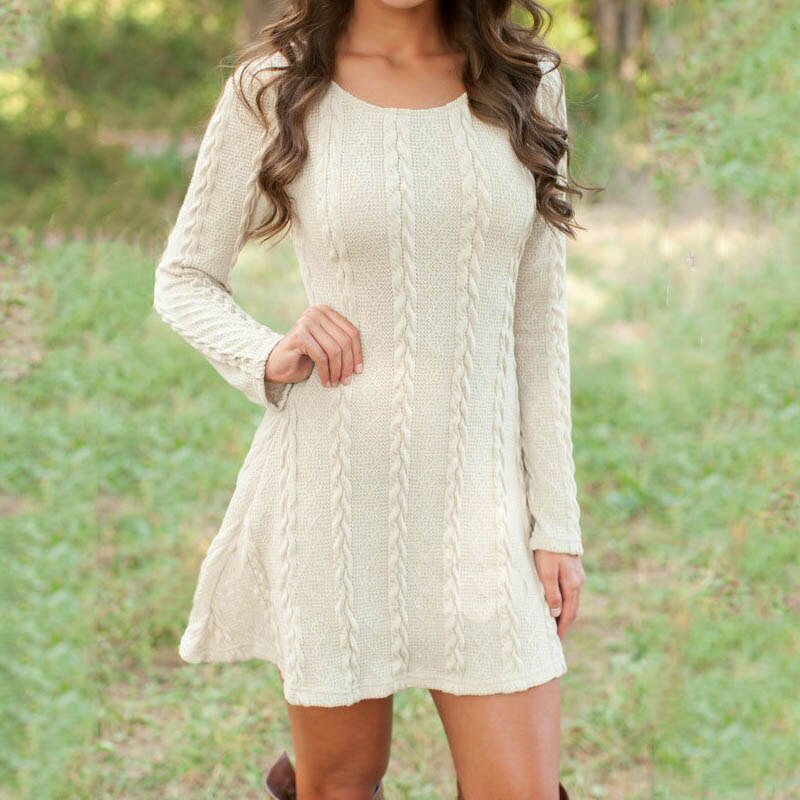
The Cozy Plus-Size Knitted Sweater Dress for the Autumn/Winter Season has a rounded neckline, long sleeves and a short, relatively straight silhouette in its product photo. It offers a different starting point from a dress with a strongly defined waist. Compare it first with knee-high boots and tights if you like a simple outfit with a visible boot shaft.
Before adding a belt, check the unbelted version. Then try a belt only if you want that styling change, and look at where the hem lands after the fabric is gathered. Do the same check with a crossbody bag on: the outfit should work with the accessories you intend to carry, not just with your hands at your sides.
For a casual lunch, consider flat or low-heeled boots and a coat that you can comfortably close over the dress. If you prefer ankle boots, try those too. A shorter dress does not require tall footwear; the choice is whether you want the boot shaft or the tights to carry more of the visual interest.
The wrap-tied midi: check the skirt beside the shaft
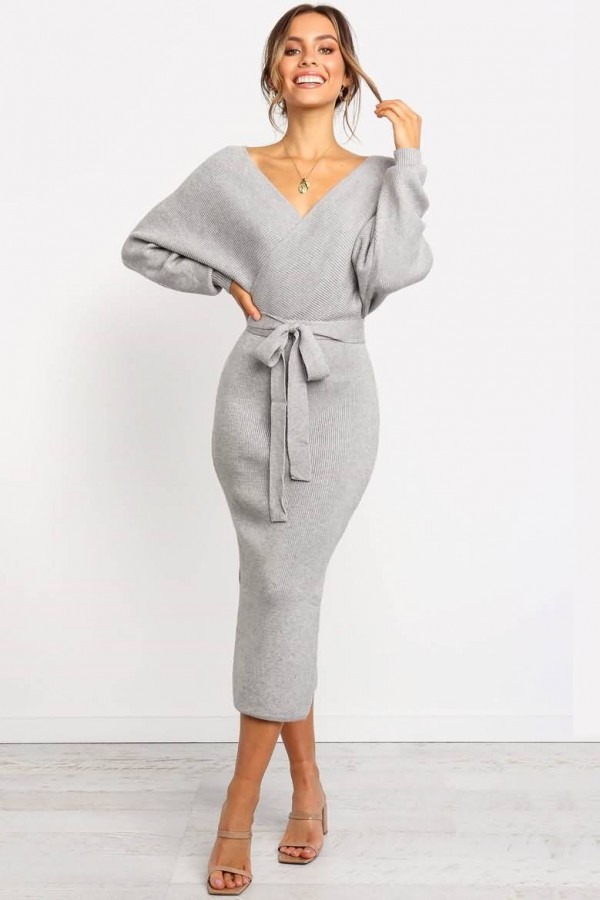
The Wrap-Tied Long Sleeve Bodycon Sweater Dress is shown with a crossover V-neck, a waist tie, long voluminous sleeves and a closer skirt ending around mid-calf on the model. Use that photo as a silhouette reference, not as a measurement of where the hem will land on you.
I'd compare this dress with a simple ankle boot first, so you can see the skirt outline without a tall shaft underneath it. Then try a knee-high boot if you want an overlapping look. Check that the skirt moves freely around the boot and returns to its resting position after a step. If the overlap creates a ridge you dislike, changing the boot may be easier than changing the whole outfit.
Tie the waist comfortably before judging the hem. Sit, stand and walk with the knot in place. If you are planning dinner after a walk, test both activities instead of assuming that a standing mirror check settles the outfit. Keep the bag compact and jewelry simple if you want the neckline and waist tie to remain the main details.
The flared pleated midi: watch the moving hem
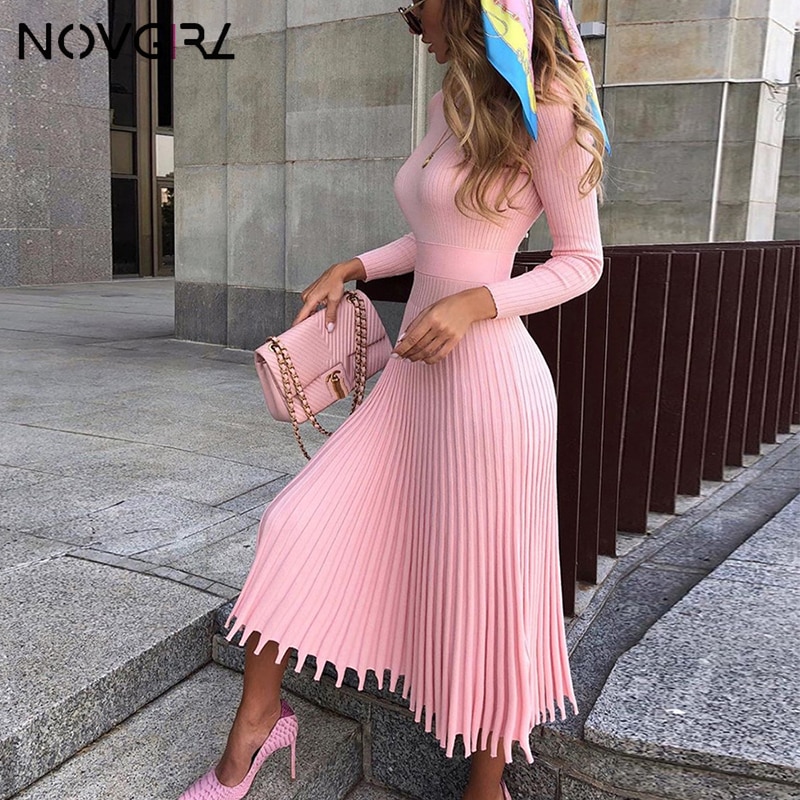
The Knitted Pleated Midi Dress has a defined waist and an outward-flaring skirt in its original photo. The skirt shows vertical pleat-like lines and an uneven pointed hem. Those details make it a useful comparison with the straighter silhouettes above: judge the boots with the skirt moving, not only in a still pose.
Try an ankle boot if you want a clearly visible break beneath the hem. Try a tall boot if you prefer the footwear to continue beneath the skirt. Neither version has to match a formula. Take a few normal steps, turn, and check whether any longer points of the hem meet the boot top in an awkward way.
For a lunch or informal gathering, I'd start with a plain boot and a small bag, letting the skirt be the focus. When adding a coat, try it both open and fastened. Look at the two hems together and choose the combination you like, rather than treating a particular coat length as compulsory. The product photo shows heels, but you can use it to assess the dress shape without copying its styling.
Measure the boots separately from the dress
Dress size does not tell you boot-shaft size. Clarks' boot-fit guide recommends measuring calf circumference around the widest part of the calf and calf height from the base of the foot to the knee fold while seated with the leg at a right angle. It also notes that retailers' calf sizing differs. Use the actual boot measurements and the maker's own measuring instructions rather than relying only on a wide-calf label.
For this outfit, compare two separate decisions: whether the boot fits your foot and leg, and whether you like where its shaft meets the dress. A pair can pass one test and fail the other. With boots already in your wardrobe, try the outfit with the tights or socks you intend to wear. Zip or pull them on normally; don't build the outfit around footwear that needs constant adjusting.
A five-minute outfit check before you decide
First, put on the complete combination: dress, boots, tights or socks, coat and bag. Check the dress's size chart against your measurements when shopping; a model photo alone cannot establish fit or length.
Second, sit in an ordinary chair. Notice the dress hem, the boot top near the knee and how the waist feels. Third, walk across the room and turn. Watch for the skirt catching, the boot rubbing, or a hem you keep pulling down. Fourth, fasten the coat and raise your arms enough to put on your bag. Decide whether the outfit works as a whole.
Finally, remove one accessory if the result feels busier than you wanted. The short dress makes the boots prominent; the wrap-tied midi emphasizes the waist; the pleated midi gives the skirt more movement. Choose that main feature first, then shop the dress below that best supports it. You don't need three new pairs of boots to make three different dress shapes work.