
Plus-Size Shirt Dresses: Check Button Gaps Before the Belt
A shirt dress can look relaxed in a photograph and still need careful checking at the button front. The useful question is not whether a belt makes it look fitted. It is whether the dress closes comfortably before you add the belt. For plus-size shoppers comparing button-front styles, that distinction makes a better starting point than a familiar letter size.
This guide compares three different designs: a tied-waist shirt dress, a straight-front style with chest pockets, and a long shirt dress pictured worn open. Use the product cards to explore each one, then work through the same closure checks. These are shopping and try-on suggestions, not a promise that a photographed garment will fit your body in the same way.
First, separate body measurements from dress measurements
Start with current bust, waist and hip measurements, then read what the product's size chart actually measures. A chart for body measurements is not a chart of the finished dress. If you compare your body directly with a finished-garment number, you also need room for movement; a matching number alone does not establish comfortable fit.
New Mexico State University's Pattern Alteration guide explains that ease varies with the design, fabric and preferred fit. Its sewing guidance is a useful reminder to avoid applying one fixed allowance to every ready-made shirt dress. It does not supply measurements for the products below.
For your shopping notes, write down which chart you used, your three measurements and the shape you prefer. If garment measurements are provided, compare like with like against a button-front dress you already enjoy wearing. Measure that reference garment consistently, with the front closed and without stretching it. Keep width measurements separate from full circumferences; confusing the two produces a misleading comparison.
Tied waist: judge the closed front before adjusting the shape
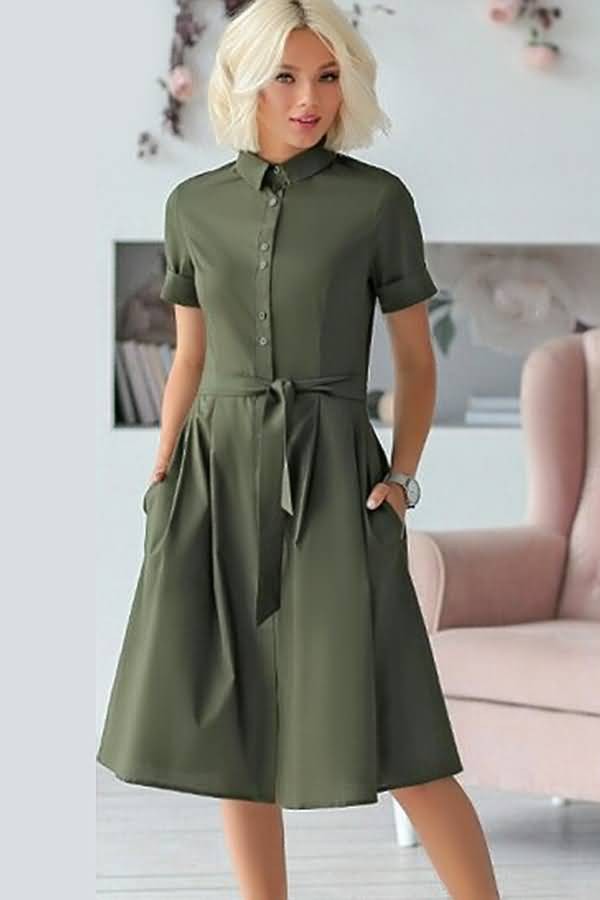
The Button Up Tied Waist Short Sleeve Shirt Dress is the starting point if you like a defined waist. Its original image shows a collared neckline, a front button row and short sleeves with turned-back cuffs. Consider that combination for a daytime lunch or an informal gathering where a shirt-style dress suits the invitation.
Your first try-on should be with the tie loose. Close the buttons you intend to wear closed, let your arms rest normally and look at the front from straight ahead and from the side. Then sit down. Only after that should you adjust the tie to the amount of definition you want.
Compare the two views. Does the tie leave the closure lying flat, or introduce a pull near the waist? Can you reach forward without having to readjust the dress afterward? If tightening the tie changes a comfortable front into a strained one, try a looser tie rather than treating maximum cinching as the goal. The photograph is a design reference, not a measurement of how the waist will sit on you.
Straight front and chest pockets: inspect the details together
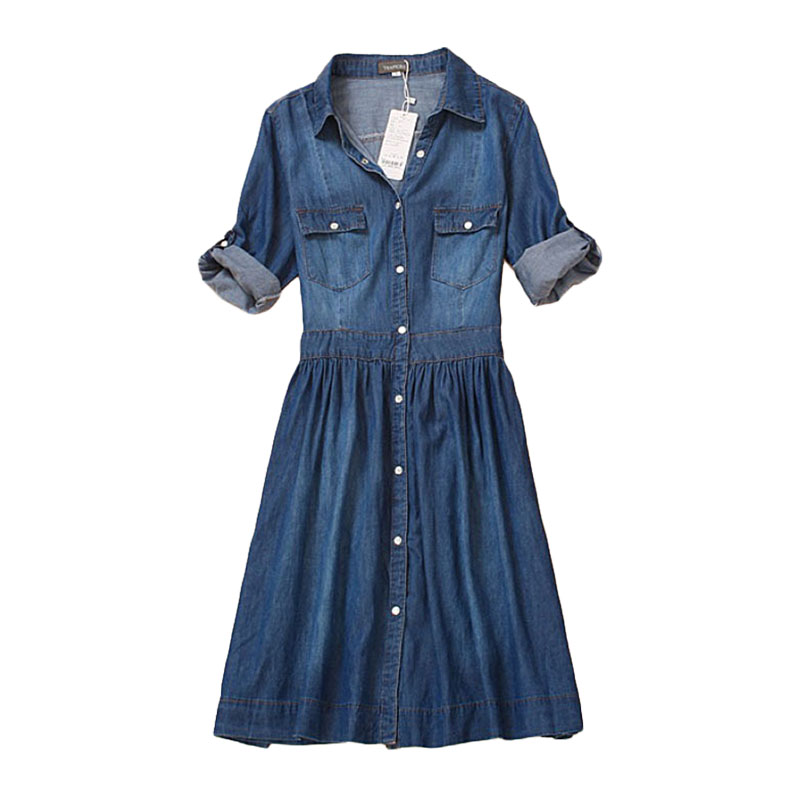
The Elegant Spring Style: Plus Denim Jeans Dress offers a different visual starting point. The original image shows a collar, contrasting front buttons, buttoned chest pockets and sleeves pictured turned back. Use those details to decide whether you prefer a more shirt-like front rather than choosing solely from the product name.
For this design, inspect the closure and the pocket area at the same time. A front view can help you notice whether one side is being pulled differently from the other. Try the dress with the undergarments you plan to wear, since the point is to assess your intended outfit rather than an unrelated try-on combination.
Make a second comparison with the belt loosened or removed, if removable. Do you still like the dress's shape? If yes, you have more flexibility in styling it. If not, decide whether the belted result is comfortable enough to wear through your actual plans. Do not choose a tight belt as a way to conceal a front that you already dislike when it is closed. Treat fiber content, care and garment measurements as separate product-page checks, not facts that can be read from the image.
Long shirt dress: an open-front photo does not test closed-front fit
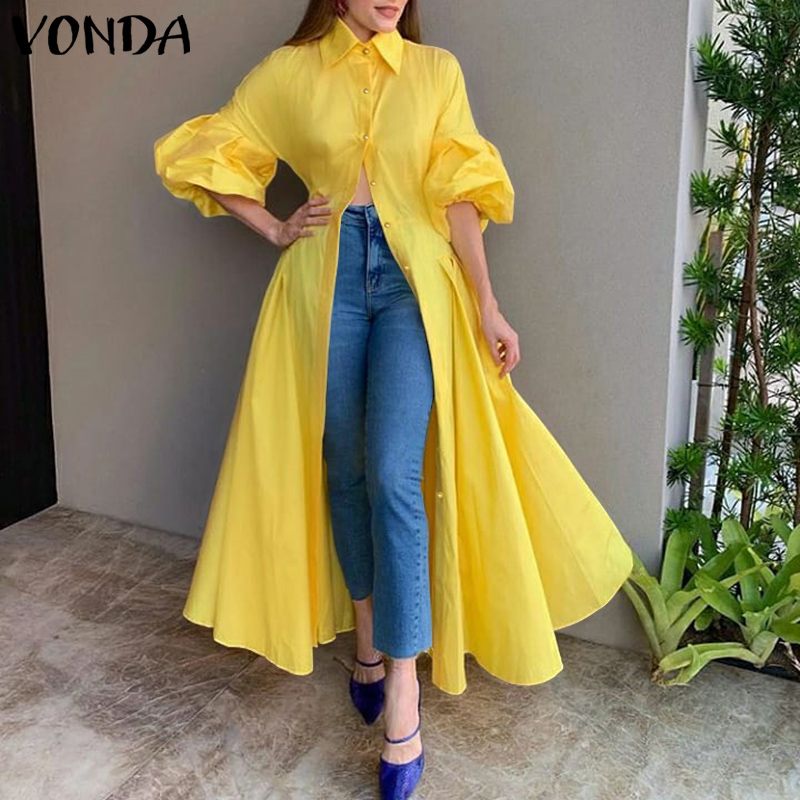
The Long Maxi Shirt Dress Puff Sleeve Collar Workwear is pictured as a long collared design with a button row and voluminous sleeves. Crucially, the original photograph shows it worn open at the front. That styling may appeal to you, but it cannot demonstrate how the buttons will lie when the dress is closed.
Decide which outfit you are shopping for before comparing it with the other two designs. If you want a closed dress, make bust, waist and hip closure your priorities. If you want an open layer over another outfit, start with the shoulder and sleeve fit, then consider whether the length works with that underlying outfit and your shoes. Do not treat these as the same buying decision.
For a closed-dress try-on, check the lower button area while seated and during a normal step, as well as the bust. For open-layer styling, try the exact outfit underneath instead of relying on a photograph of somebody else's combination. Check the actual garment length against your preferred point on the leg rather than taking the word maxi as a guarantee.
A five-step button-front checklist
Use this sequence before deciding which design earns a place in your wardrobe.
1. Close first, style second. Leave a waist tie or removable belt loose and fasten the front as you intend to wear it. Assess that version before adding accessories.
2. Look between buttons. Inspect the spaces between fastenings rather than checking only that each button reaches its hole. Note any visible opening you would be uncomfortable wearing.
3. Test your real movements. Sit, reach forward as you would across a table and take a normal walking step. Observe the bust, waist and hip areas separately.
4. Check the whole result. If another size improves the front, also reassess the collar, shoulders and sleeves. A better closure is useful only if you like the rest of the dress too.
5. Make a wear-or-pass decision. Would you wear the dress as tried on, without repeatedly adjusting it? If your plan depends on a fix, price and assess that fix separately before committing. The Assembly Line's sewing guide discusses button placement and hidden closures, but that is alteration guidance, not evidence that these dresses need or can accept a particular alteration.
Choose the tied-waist design if adjustable definition is the feature you want to test first. Start with the pocketed design if you prefer its shirt-front details. Explore the long style if you already know whether you want a dress or an open layer. Then visit the relevant product page, compare its sizing information with your notes and choose for the outfit you will actually wear.