
Plus-Size Polka Dot Dresses: Match the Dot Scale to the Dress Shape
Polka dots look simple until the dress moves. The dots can bunch at a gathered waist, line up unevenly along a button placket, or turn busy on a ruffled skirt. So instead of asking whether dots are flattering, ask a more useful question: what is the dress doing underneath the print?
This guide compares three DressMePlus polka dot dresses with very different shapes: a button-front tie-waist dress with long sleeves, a belted halter with a high-low hem, and a puff-sleeve A-line with a square neckline. The notes come from the product photos and listings, not from try-on experience. Pick the construction you like first, then enjoy the print.
Start with the dots, then the details
All three dresses below use small, evenly spaced dots rather than large graphic circles. That keeps the print classic, and it shifts the decision to the details around it: closures, waist seams, sleeves and hems.
A quick test works for any dotted dress. Look at the product photo from a few steps back, then zoom in on the waist, the neckline and the hem. Ask three things. Do the dots stay readable where the fabric gathers? Does a button placket or seam break the pattern in a way you like? Does the hem look balanced with the sleeves? A dress can have a lovely print and still be wrong for the way you plan to wear it.
Styling publications tend to keep accessories simple with dots. Marks & Spencer's guide to wearing the print suggests minimal bags in the colour of the dot or the background, with polished neutrals if you want a coordinated look. That is a good rule for the dresses below: let the print be the statement.
The button-front tie-waist: a defined line from neckline to hem
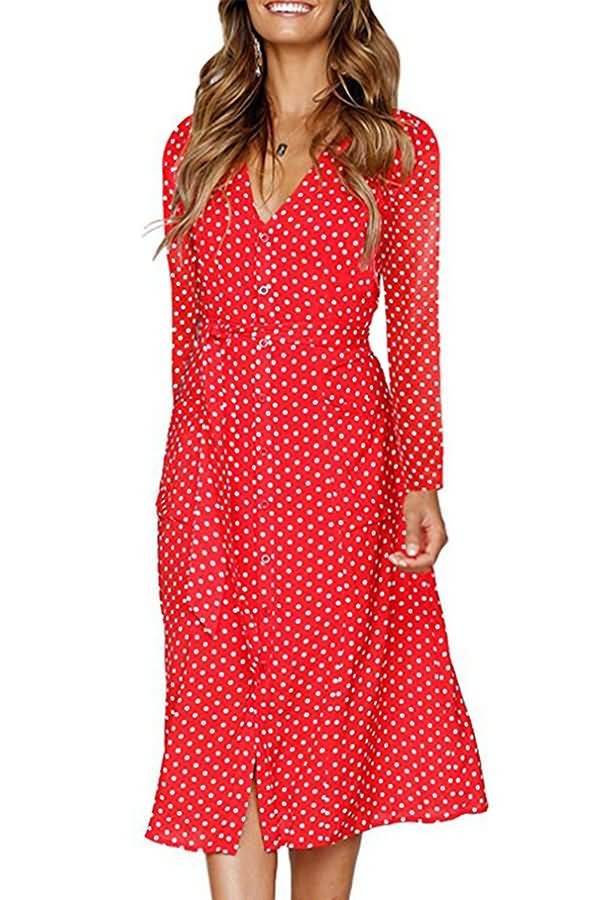
The Fun Polka Dot Button Up Tied Long Sleeve A Line Dress is the most structured of the three. In its photo it is red with small white dots, a deep V-neck, long sleeves, a row of buttons down the front and a tie at the waist.
Because of the button placket, the center front becomes a vertical line you will notice. Check the size chart against your bust and waist measurements, then think about how the buttons will sit when you sit down or lift your arms. The tie lets you choose where the waist falls, so try it slightly above and below your natural waist and see which position keeps the dots from bunching.
This is the dress to compare first if you want sleeves and a defined shape for a fall lunch, an office event or a family gathering. A neutral coat, dark tights or boots keep the red as the focal point.
The belted halter with a high-low hem: movement first
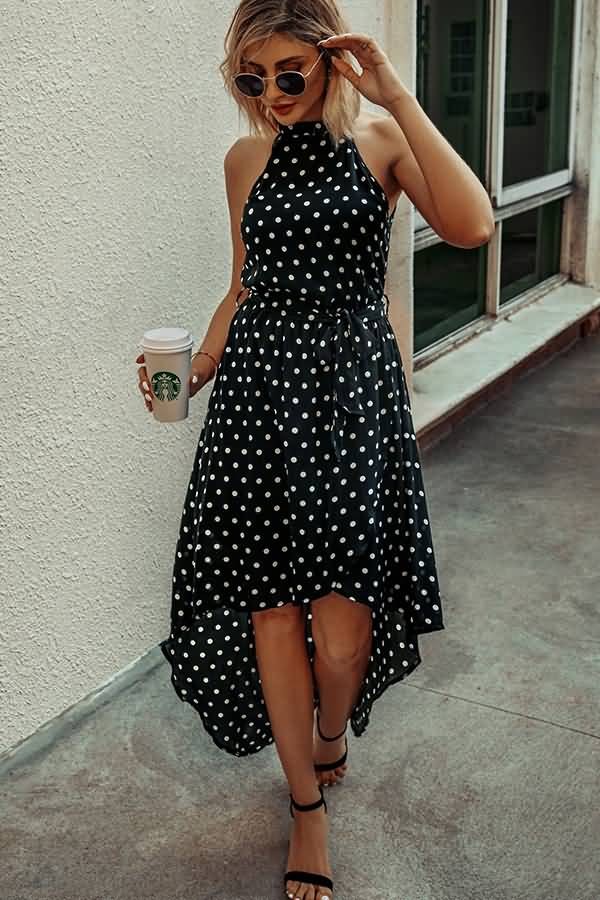
The Polka Dot High-Low Dress with Belt takes a different approach. The photo shows a black dress with small white dots, a halter neckline, a belt tied in a bow at the waist and a hemline that is shorter in front than at the back, with ruffled volume in the skirt.
With this kind of hem, check movement rather than just the standing view. Walk, turn and sit. Does the shorter front stay where you want it? Does the longer back feel comfortable in your usual shoes? Bare shoulders also change the layering question: decide in advance whether you will wear a cardigan, jacket or wrap, and check that it works with the halter tie at the neck.
The dots are small on a dark background, so the print reads as a texture from a distance. That makes the bow and hem the visible features. Keep jewelry modest if you want the belt to stay the focus.
The puff-sleeve A-line: soft details, so keep everything else simple
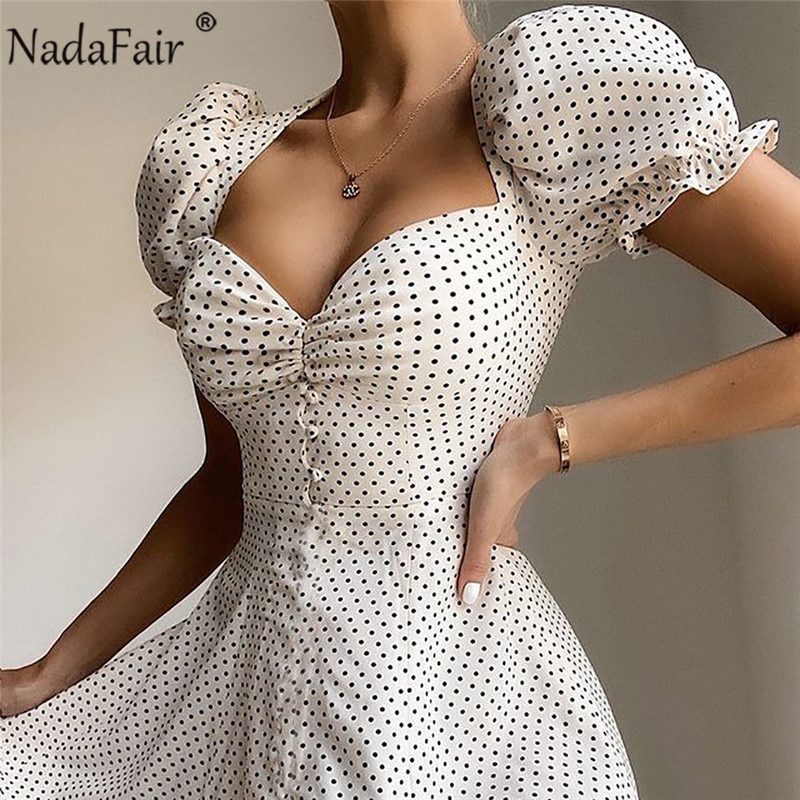
The Polka Dot Midi Boho Sundress Puff Sleeves High Waist is white with small black dots in its photo. It has a square neckline with a V-shaped cut at the center, gathered detail at the bust, short puffed sleeves, a row of fabric buttons and a flared A-line skirt.
This dress already has a lot of shape: ruffled sleeve edges, gathering and buttons. Because of that, simple accessories work best. A plain cardigan, denim jacket or tailored blazer is easier to wear over puff sleeves than a bulky layer, but test the combination, since the sleeve gathers can bunch under a narrow jacket sleeve.
Compare the listing's size information with your bust and upper-arm measurements, especially if you want the sleeves to sit comfortably. The skirt flares, so check how it falls over the shoes you plan to wear. This is the option for readers who want a lighter, more romantic dotted dress without a belt.
A quick comparison
Button-front tie-waist: choose it for long sleeves and a clear vertical line. Check the placket when you sit and raise your arms.
Belted halter high-low: choose it for movement and an open neckline. Check the hem when you walk and plan a layer for the shoulders.
Puff-sleeve A-line: choose it for a softer, more detailed look. Check the sleeves under a jacket and the skirt's drape over your shoes.
If you are undecided, start from the part of the dress you care about most: sleeves, waist or skirt. That one feature usually sorts these three faster than the print does.
A short checklist before you buy a dotted dress
First, read the size chart and compare it with your own measurements, or with a dress you already own that fits well. A model photo cannot settle fit.
Second, enlarge the product image and watch the dots at the seams, closures and gathers. A print that looks even on a flat screen will behave differently once the dress is worn.
Third, plan the layer. Dots with a cardigan, denim jacket or leather jacket can look relaxed, while a tailored blazer is more polished; Vogue's roundup of ways to wear the print shows a range of approaches if you want more ideas.
Finally, keep the rest of the outfit quiet. Dots already supply the pattern, so solid shoes and a simple bag usually let the dress do the work.