
Plus-Size Long-Sleeve Dresses: Check the Upper Arm, Not Just the Bust
A dress can look right across the bust while its sleeves stop you reaching forward. When choosing a plus-size long-sleeve dress, treat the upper arm as a separate buying question. A full skirt, loose waist or dramatic sleeve outline cannot answer it.
Start with the kind of sleeve you want: continuous coverage, an open sleeve, or visible volume gathered at the wrist. Then check measurements and movement. The three DressMePlus examples below show different shapes, not three proven fits. None has verified sleeve measurements here.
Measure the upper arm before choosing a size
Seamwork recommends measuring the fullest part of your upper arm. Use a flexible tape, normal posture and a mirror or helper; record the number. Its guide notes that a tight bicep can restrict lifting and pull across the garment front. [3]
Keep that number beside your shopping notes rather than relying on a remembered size label. Ask the seller for the finished upper-arm circumference in the exact size you are considering, and ask where that measurement was taken. If the reply gives only bust, waist and hip, your sleeve question is still unanswered. A photograph cannot supply the missing number.
Separate body charts from finished sleeve measurements
Seamwork distinguishes movement allowance from volume added for silhouette. Compare finished garment measurements with body measurements; their difference is ease. A body size chart alone does not reveal that difference. [4]
Check the chart heading before comparing numbers. Ask whether the sleeve figure is a circumference or a flat width, and request matching units. Do not compare a flat sleeve width directly with the tape measurement around your arm.
For a shopping reference, photograph the sleeve of a dress you already reach easily in. Mark the place you want the seller to measure on the candidate. Match measurement locations, not just labels. Keep shoulder shape in the comparison too; two sleeves can have similar width but join the dress differently.
196175: long sleeves with visible openings
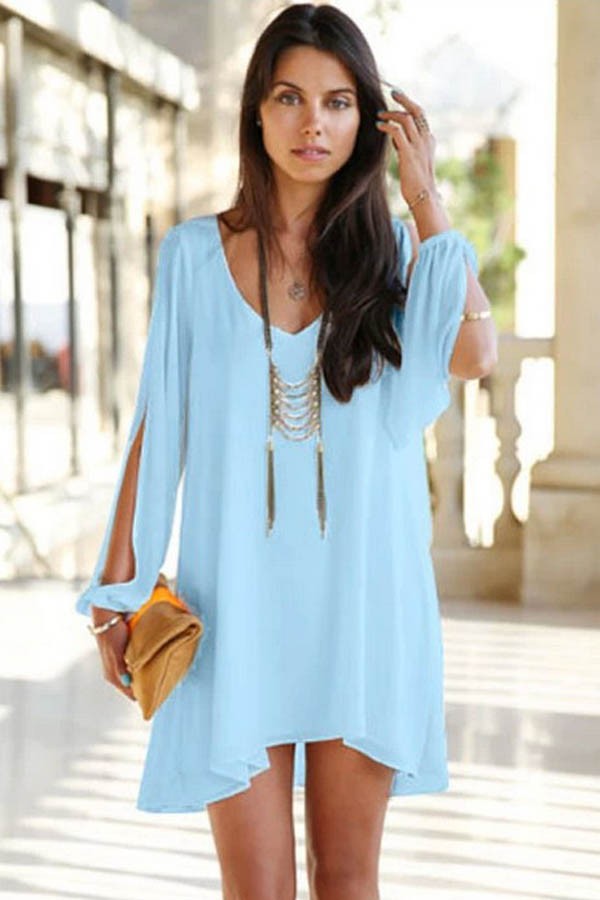
The image for the Light Chiffon Shift Dress V-Neck Long Sleeve shows loose-looking sleeves with visible openings along the arms and open-looking wrist ends. Its body has a broad shift-like outline. This is the example to inspect if an open sleeve appeals to you.
If uninterrupted upper-arm coverage is your priority, do not choose it from the words 'long sleeve' alone. Ask for close views of the shoulder and arm openings with the arm lowered and raised. Confirm where skin remains exposed. An opening also makes a width comparison harder: ask how the seller measures that construction rather than treating it as a closed sleeve. The listing name is not verification of composition or opacity.
285939: a gathered sleeve beside a defined waist
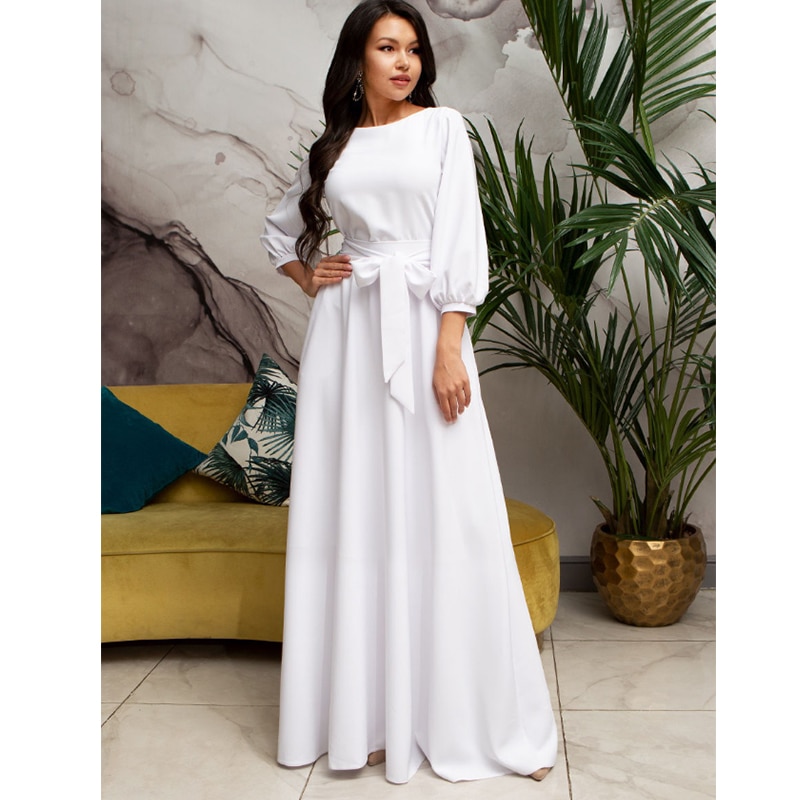
The New Solid Lantern Sleeve Maxi Long Neck Casual Dress image shows rounded sleeve volume narrowing into gathered wrist ends, with a bow at the waist. The photo is useful for comparing a defined-waist silhouette with fuller-looking sleeves.
Look at the shoulder join as well as the widest visible sleeve area. A lantern outline does not prove room at the armhole or bicep. Request an upper-arm measurement and a close cuff view before judging it. The pictured neckline appears wide rather than high; avoid using the listing's 'long neck' wording as a coverage description. Gathered wrist ends tell you where the sleeve narrows, not how tightly it will fit your arm.
351521: billowing sleeves on an uncinched body
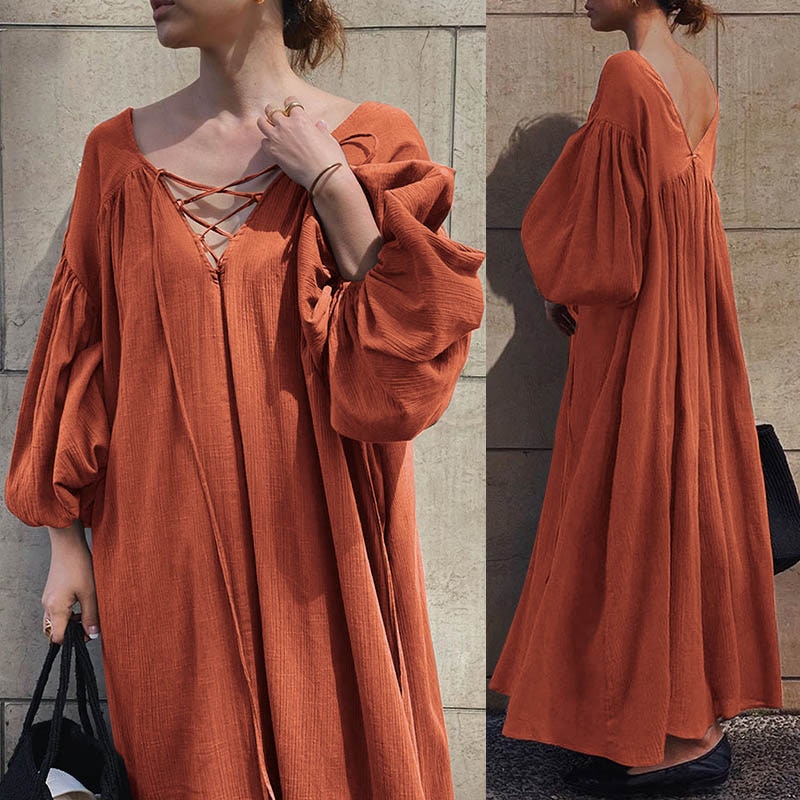
The Maxi Dress Lace-Up Lantern Sleeves image shows pronounced billowing sleeves, narrow gathered ends and a broad, uncinched dress body. A low gathered sleeve join is visible, while thin lacing appears at the front neckline. The rear view shows a deep back opening.
Choose this card as a visual comparison for sleeve volume without a defined waist. Do not transfer that broad body outline into an assumption about sleeve fit. Ask where the sleeve narrows nearest the upper arm and request that measurement. The description places lace-up detailing at the sleeves, but the photograph shows it at the neckline; the photo supports discussing the visible neckline detail, not promising adjustable sleeves.
Try reaching, then inspect the front and back
During a permitted try-on, leave the sleeves in their intended position instead of pushing them up. Start with arms lowered and note where each cuff rests.
Reach forward as if holding a steering wheel. Check the upper arm, front armhole and back between the shoulders for pulling. Then reach toward a shelf at a height you normally use. Notice whether the whole dress lifts or the cuff drags sharply up the forearm.
Bend both elbows, bring a hand toward the opposite shoulder and lower your arms again. Use a mirror or phone view to inspect front and back. Does the sleeve return to position without tugging? Record the movement that failed and where you felt resistance. Do not force a restricted reach just to finish the test.
Test the wrist opening and your actual coat
Gathering at a cuff is a design detail; bicep tightness is a different question. Check whether your hand passes through the opening using the intended fastening, if present. Bend your wrist and elbow with the cuff closed. Watch for pressure or a sleeve end that catches on your watch. Do not assume a gathered opening stretches.
Try your own coat over the dress. Slide each sleeve through without stuffing the dress sleeve upward, then repeat the forward reach. Remove the coat and see whether the cuffs have ridden up or the sleeve volume has bunched. If you need to rearrange both sleeves every time, decide whether that routine suits how you dress.
Choose the sleeve you can verify
Browse the dresses collection with a sleeve requirement written down: closed upper-arm coverage, a specific wrist opening, or a particular coat pairing. Use these cards to compare construction, then request the missing details for your preferred item. Stock and size availability can change; listed options do not confirm your selected variant is available.
Frequently asked questions
Does a long sleeve guarantee full upper-arm coverage?
No. Inspect openings and shoulder details separately. Product 196175 is a useful reminder: its pictured sleeves extend down the arms but have visible openings. Confirm opacity separately if that matters to you.
Should I order a larger size if only the sleeves seem tight?
Request sleeve measurements for both sizes first. Check the other garment dimensions before switching. If neither size answers your sleeve requirement, consider another construction rather than guessing from a larger label.