
Plus-Size Jumpsuits: Check Torso Length Before Leg Shape
A jumpsuit is a top and a pair of pants joined at the waist, so it has to fit in two places at once. That is why a jumpsuit can match your bust and waist and still pull when you sit down. The number that decides it is torso length: the distance from shoulder to crotch.
This guide starts with a simple way to check that, then compares four DressMePlus jumpsuits with different leg shapes: a striped wide-leg, a tapered drawstring style, a wrap-front with an elastic waist, and a mock-neck wide-leg with balloon sleeves. The notes come from the product photos and listings, not from try-on experience.
Start with torso, not the size label
Fit guides for one-piece garments keep returning to the same point. One boutique guide describes the measurement as a single loop: start at the top of one shoulder, run the tape down the front, between your legs, up the back and to the same shoulder. Compare that number with the same loop on a flat garment, doubled. If the garment's number is smaller than yours, it will pull whatever the label says.
The warning signs are easy to spot in the mirror: diagonal creases fanning out from the crotch, or a waist seam that has crept upward. Size-chart specialists make a related point, that top length and rise have to be read together, because together they decide where the crotch lands when you stand.
Most product pages do not list every measurement. When a page gives a size chart, compare your bust, waist and hip measurements with it, and ask yourself whether the style has built-in give, such as an elastic waist, a wrap front or a drawstring. Those details can make a torso mismatch easier to live with. They do not erase it.
The striped wide-leg: a fitted line over the torso
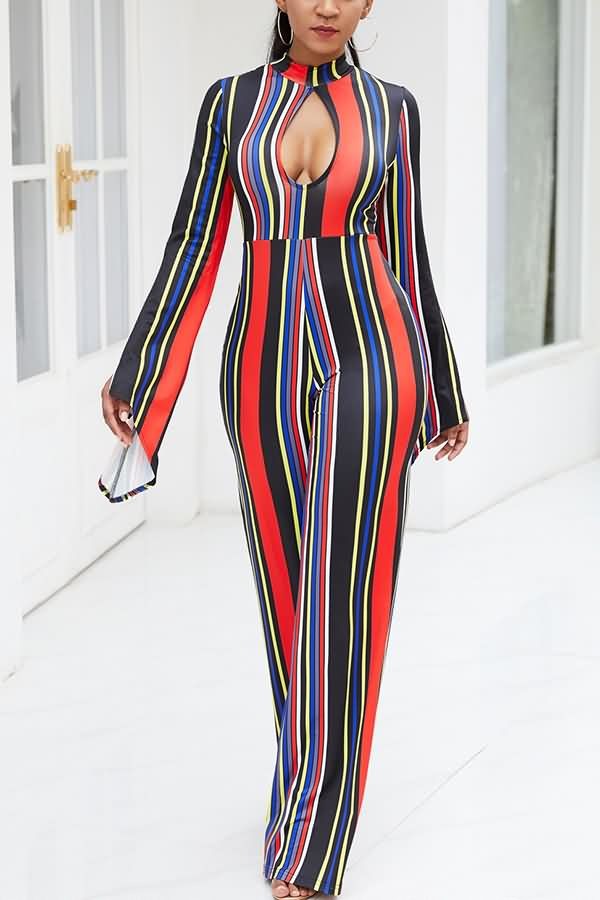
The Stripe Keyhole Wide Leg Jumpsuit has vertical stripes in black, red, yellow and blue in its photo, a high neckline with a teardrop keyhole, long flared sleeves and wide legs that reach the floor. The listing describes 100% polyester.
A wide leg is where length matters most. One fit guide notes that with a wide leg, a hem an inch short breaks the whole line, so decide on your shoes first. In the photo the torso looks closer to the body while the legs are loose. That means the bust, shoulders and torso length deserve more attention than the hips. Raise your arms and sit in front of a mirror when you try it: if it pulls at the shoulders or crotch, the body is too short for you.
The vertical stripes give the outfit a long visual line, so keep the rest simple. Plain shoes and a single accessory let the pattern do the work.
The tapered drawstring: the easiest to wear with flats
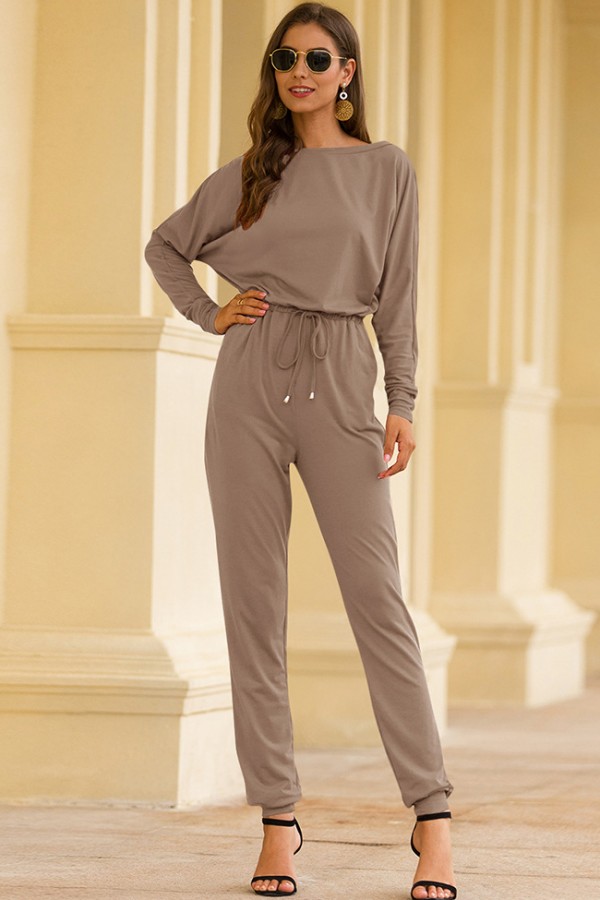
The Khaki Boat Neck Long Sleeve Jumpsuit looks taupe in its photo. It has a wide rounded neckline, long sleeves gathered at the wrists, a drawstring at the waist and tapered legs that gather at the ankle. The listing describes polyester knit with a relaxed fit.
Tapered legs show the ankle, so exact length is less critical than on a wide leg, and flats or ankle boots suit the shape. The drawstring lets you move the waist up or down, which is useful if the torso is slightly long. It cannot add length if the torso is short, so the sitting test still applies.
Check the legs too. A tapered jogger shape needs room at the thigh and a cuff that sits comfortably at the ankle. Compare the thigh and hip numbers on the size chart, not just the waist.
The wrap-front with an elastic waist: a defined waist with built-in give
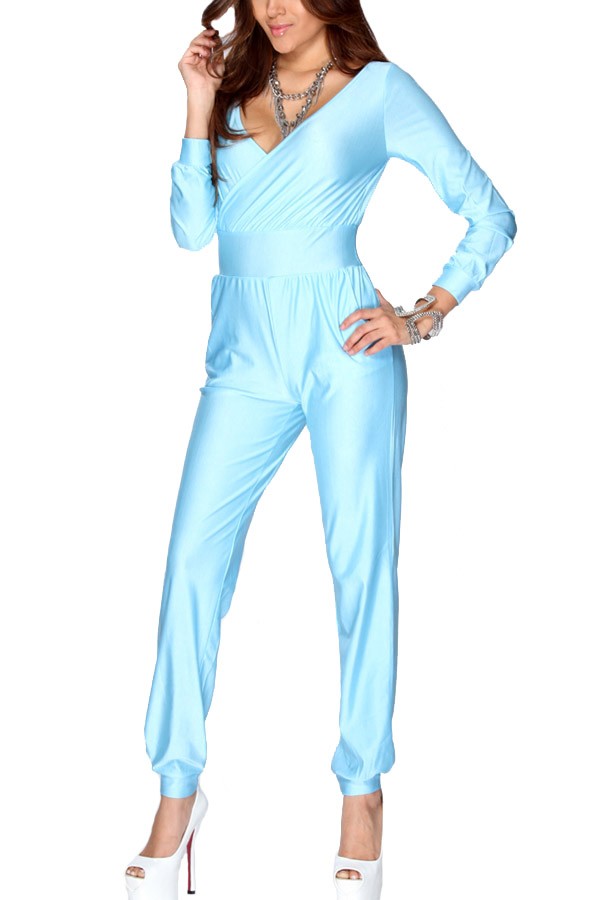
The Light Long Sleeve Pleated V-Neck Jumpsuit appears light blue in its photo, with a wrap-style V-neck, long sleeves, a wide cinched waistband and tapered legs. The listing mentions a pleated design and an elastic waist.
A wrap bodice can be adjusted at the bust, and an elastic waistband gives a little flexibility between the bodice and legs. Fit guides often suggest those features for readers who find one-pieces tight through the middle. Still, check the neckline when you bend or reach, since a wrap can open at the front.
The pleats and gathers sit at the waistband, so look at the waist area in the photo before choosing: if you prefer a smoother line over the stomach, this is the detail to weigh.
The mock-neck wide-leg with balloon sleeves: the most structured option
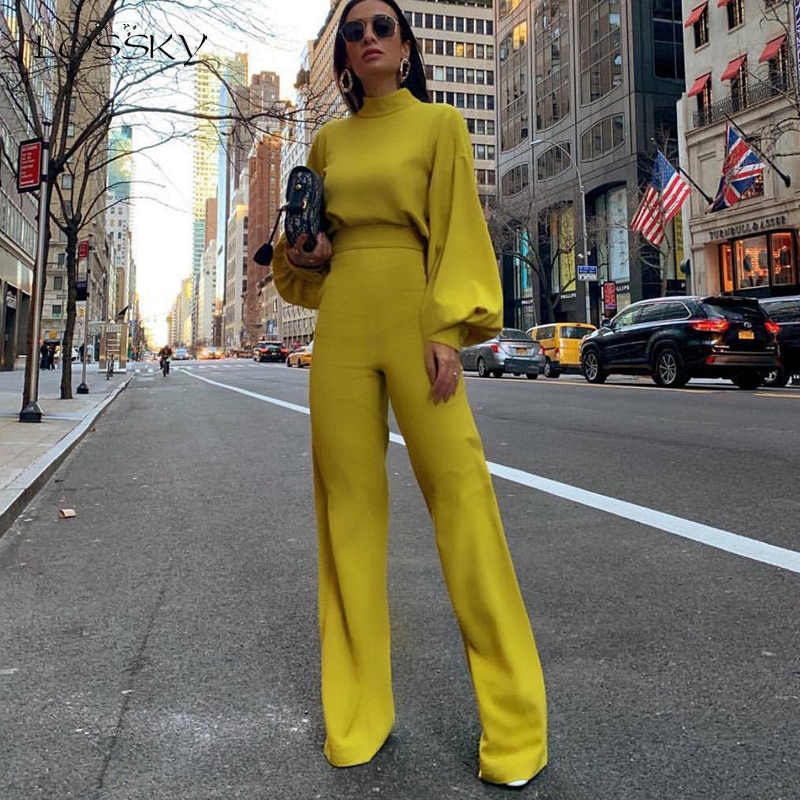
The Elegant Half Turtleneck Wide Leg Jumpsuit is bright yellow in its photo. It has a high half-turtleneck, voluminous balloon sleeves cinched at the wrist, a defined waist and wide legs. The listing describes polyester broadcloth, a loose fit and button decoration.
With a high neckline and full sleeves, check comfort at the neck and upper arm, and make sure the sleeve cuffs are not so snug that they restrict movement. A woven fabric has less stretch than a knit, so one guide's advice is worth repeating: when you are between sizes in a woven, choose the comfortable size rather than sizing down.
Because the top has volume, the wide legs keep the outfit balanced. As with the striped style, plan the hem for the shoes you will actually wear.
A quick comparison
Torso check: all four need it. The wrap-front and drawstring styles have the most built-in adjustment at the waist.
Leg shape: the striped and mock-neck jumpsuits are wide-leg, so length and shoes come first. The drawstring and wrap-front jumpsuits taper at the ankle, so thighs and cuffs come first.
Sleeves: flared on the striped style, balloon on the mock-neck, gathered on the drawstring, and plain long sleeves on the wrap-front. Check the upper arm and wrist on each.
Fabric: the listings describe polyester in each of these, so the surface will be less forgiving than a stretchy jersey. Read each listing and size chart for the exact details.
A five-step checklist before you buy a jumpsuit
1. Measure your torso loop and compare it with any garment measurement on the page. 2. Choose the leg shape you will actually wear: wide leg with heels or longer shoes, tapered with flats. 3. Compare bust, waist, hip and thigh measurements with the size chart, and size to the largest measurement. 4. Pick a waist feature that suits you: drawstring, elastic, wrap or fitted seam. 5. When you try it on, raise your arms, bend, and sit. If it pulls at the shoulders or crotch, it is a torso problem, not a styling problem.